
Why Is My Fire Pump Losing Pressure? Common Causes and Repair Checks
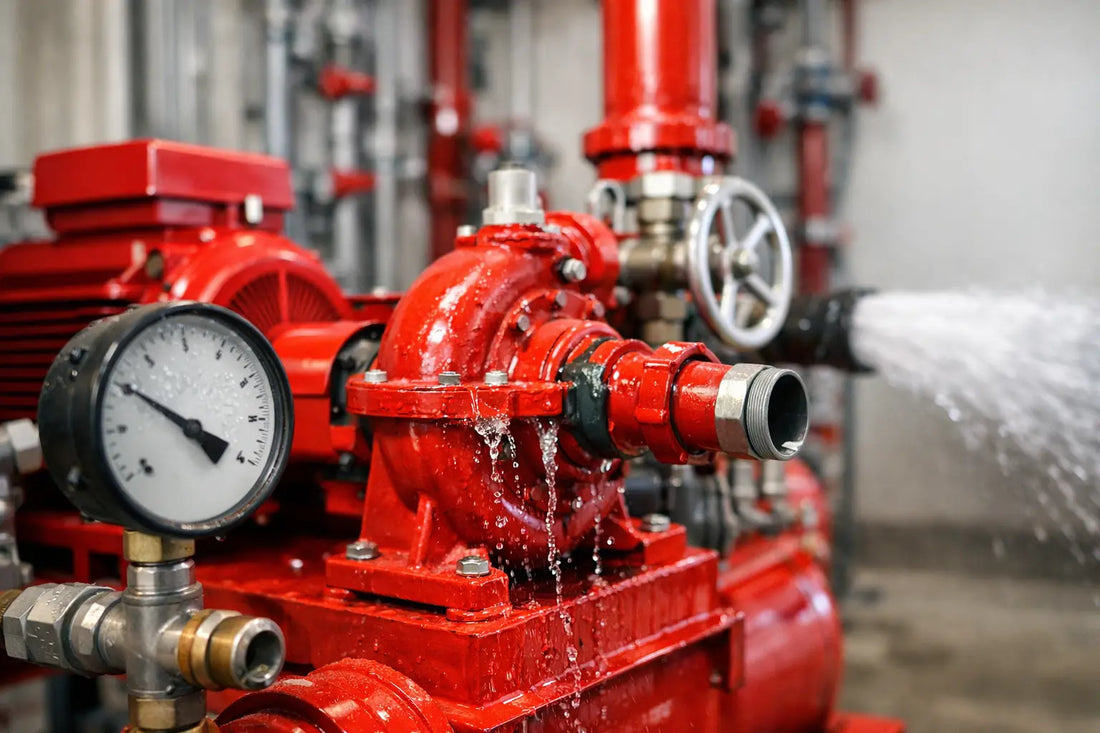
A fire pump is designed to supply water at the pressure and flow required by a building’s fire protection system. If pressure is lower than expected, drops during testing, or fluctuates while the pump is running, the cause needs to be identified rather than guessed.
Low pressure can come from the water supply, suction pipework, the pump, the driver, a valve position, or an inaccurate gauge. The pattern of the pressure loss often gives a technician the first useful clue.
What does low fire pump pressure look like?
A single pressure reading does not tell the whole story. Technicians normally compare suction pressure, discharge pressure, flow and previous test results.
A pump may start at a normal pressure and then lose pressure as flow increases. Another may show low pressure from the moment it starts. Pressure can also rise and fall while the pump is running. Those symptoms can point to different faults.
If a pump previously produced a consistent pressure at a given flow and now falls short under comparable conditions, the system needs investigation.
Air entering the suction side
Air on the suction side can interfere with the pump’s ability to move water properly. It may enter through leaking joints, fittings or other points in the suction pipework. Air pockets can also develop where pipework has been arranged or maintained poorly.
Symptoms can include unstable discharge pressure, difficulty maintaining suction, unusual noise and inconsistent pump performance. A technician may need to inspect the suction arrangement before assuming the pump itself has failed.
Restricted water supply or suction pipework
A fire pump cannot deliver its expected output if it cannot receive enough water.
Restrictions may come from debris, blocked strainers or intakes, partially closed valves, damaged pipework or a water supply that is not providing the expected inlet conditions. The pressure problem may become more obvious as flow demand increases because the restriction limits the water reaching the pump.
This is why pressure and flow are assessed together during testing.
Blocked, damaged or worn impeller
The impeller transfers energy from the pump driver to the water. Debris, scale or other material can restrict its passages and reduce performance.
Physical damage can have a similar effect. Wear around the impeller and, on pumps that use them, wear rings can increase internal recirculation, leaving less energy available for useful discharge pressure.
These faults usually require inspection by a qualified technician. Fire pumps should not be opened or adjusted by building staff simply because a pressure reading appears low.
Internal leakage and worn components
Fire pumps contain components that wear over time. Excessive clearances, deteriorated seals, packing problems and internal leakage can reduce performance.
An external drip does not automatically explain a major pressure loss, and a pump can lose hydraulic performance without an obvious pool of water around it. Its condition should be considered alongside test readings, operating sound, vibration and service history.
Where deterioration is confirmed, professional fire pump repair may involve replacing worn parts, correcting clearances or addressing leakage before the pump is tested again.
Valve and system-side problems
Sometimes the pump is capable of producing the required pressure, but the surrounding system affects what appears at the gauge or downstream.
A valve that is not fully open, a restriction, a bypass condition or significant downstream leakage can affect pressure. Incorrect valve positions can also create misleading symptoms after maintenance.
Building managers should record what changed and when. Fire-system valves should not be repositioned casually while investigating a fault.
Driver speed or power problems
Pump output depends partly on speed. If an electric motor or diesel engine is not driving the pump at the expected speed, pressure and flow can fall.
Electrical supply issues, motor faults, diesel engine problems or control faults can contribute to poor performance. Diagnosis should include the driver and controller rather than focusing only on the pump casing.
For pumps showing abnormal test performance, fire pump repair in Sydney should begin with identifying the source of the pressure loss before parts are repaired or replaced.
Could the pressure gauge be wrong?
Yes. A faulty, damaged or inaccurate gauge can make a healthy system appear to have a pressure problem.
Technicians can compare readings with suitable test instruments and review previous service records. Verifying a suspect gauge is far simpler than dismantling a pump unnecessarily, so instrument accuracy should be checked during diagnosis.
When should low pressure be investigated?
An unexplained change from previous test readings should be checked, particularly when the pump cannot achieve expected pressure or flow during a scheduled test.
Repeated loss of suction, abnormal vibration, unusual mechanical noise, leaks, controller faults or pressure that deteriorates as demand increases also justify investigation.
Routine fire protection services help establish a performance history, making changes easier to identify. For properties using fire protection services in Sydney, pump results should be considered alongside the condition of the connected fire protection systems rather than in isolation.
Frequently asked questions
Why does my fire pump pressure drop when water starts flowing?
For a centrifugal fire pump, discharge pressure normally changes as flow increases according to the pump’s performance curve. An excessive drop can point to restricted water supply, suction problems, internal wear, an impeller issue or inadequate driver performance. Current readings should be compared with expected performance and earlier test results.
Can a blocked suction line cause low fire pump pressure?
Yes. A restriction on the suction side can limit how much water reaches the pump. The effect may become more noticeable as flow demand rises. Suction pipework, valves, strainers and the available water supply should be checked during diagnosis.
Can a fire pump lose pressure without leaking water?
Yes. Internal wear, impeller damage, restricted suction, low driver speed or a faulty pressure gauge can produce low readings without an obvious external leak. Visible leakage is only one possible sign of a pump or system problem.
Does low fire pump pressure mean the pump needs replacing?
No. Many pressure problems can be traced to repairable components, water-supply conditions, valves, controls or instrumentation. Replacement should be considered only after the cause has been identified and the condition and performance of the pump have been assessed.
How often should a fire pump be tested in NSW?
Testing frequency depends on the system, the building’s fire safety requirements and the applicable servicing standard. Building owners and managers should follow the building’s Fire Safety Schedule, applicable Australian Standards and the service program established for the installed equipment.
If your fire pump is producing lower pressure than previous tests, fluctuating during operation or failing to meet expected test performance, Majestic Fire can inspect the pump and associated equipment to identify the cause. Our team provides fire pump service and repairs across Sydney, with testing focused on finding the fault before repair work is recommended.


